
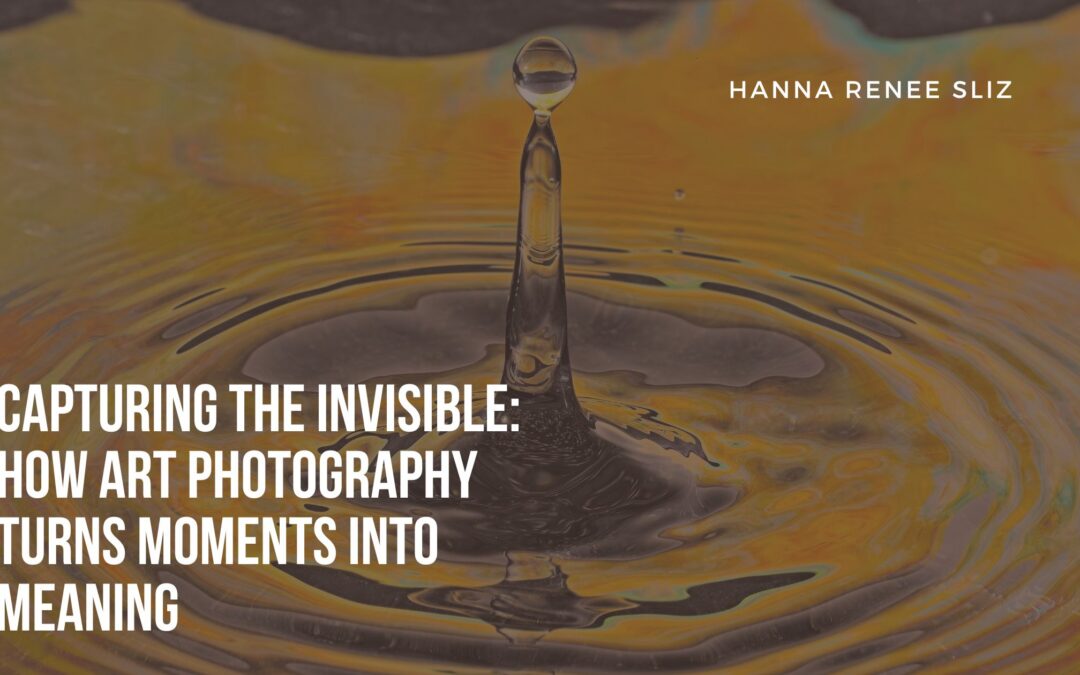
In a world saturated with images, art photography stands apart—not because it shows more, but because it means more.
Unlike commercial or documentary photography, art photography isn’t just about capturing what’s in front of the lens. It’s about interpretation. Emotion. Perspective. It transforms ordinary subjects into something layered, intentional, and often deeply personal.
More Than a Photo—It’s a Point of View
At its core, art photography is about how the artist sees the world.
Two photographers can stand in the exact same place, point their cameras at the same subject, and create entirely different images. Why? Because art photography isn’t about reality—it’s about perception.
Lighting, framing, focus, and timing all become tools to express a feeling or idea. A shadow can suggest mystery. A blur can evoke movement or memory. Even silence—captured in a still frame—can feel loud with meaning.
The Power of Simplicity
Some of the most compelling art photography is deceptively simple.
A lone figure in an empty street. A reflection in a puddle. A fragment of light hitting a wall. These images don’t overwhelm—they invite.
Art photography often leaves space for interpretation, allowing the viewer to bring their own experiences and emotions into the frame. It doesn’t tell you what to think—it asks you to feel something.
Storytelling Without Words
One of the most powerful aspects of art photography is its ability to tell stories without a single sentence.
A photograph can hint at a past, suggest a future, or freeze a fleeting moment that might otherwise go unnoticed. It can raise questions without answering them. It can capture contradictions—beauty in decay, calm in chaos, intimacy in distance.
In this way, art photography becomes a quiet form of storytelling—one that unfolds differently for every viewer.
The Role of Intention
What separates a snapshot from art is intention.
Art photographers don’t just take pictures—they make them. Every element within the frame is considered: composition, color, texture, and context. Even what’s left out of the image is a deliberate choice.
This intentionality is what gives art photography its depth. It turns a moment into a message.
A Reflection of Culture and Self
Art photography doesn’t exist in a vacuum. It’s shaped by culture, history, and the personal experiences of the artist.
Themes like identity, isolation, connection, and change often emerge through imagery. In many ways, art photography acts as both a mirror and a lens—reflecting the world while also reshaping how we see it.
Why It Matters
In a fast-moving, content-driven world, art photography invites us to slow down.
To look closer. To notice details. To sit with ambiguity.
It reminds us that not everything needs to be explained to be understood—and that sometimes, a single image can say more than words ever could.
Because at its best, art photography doesn’t just capture what’s visible.
It reveals what’s felt.